Table of contents
What Are Moissanite and Diamond?
In the jewelry world, both diamonds and moissanite are highly popular gemstones, but they differ significantly in definition, formation, and physical characteristics. Understanding these basic concepts is essential for recognizing gemstone value and choosing the right ring.
Diamond
Diamond is a natural gemstone formed from pure carbon crystallized under high temperature and high pressure deep within the Earth. Its formation typically takes hundreds of millions of years, making natural diamonds extremely rare. Diamonds are famous for their exceptional hardness and optical performance, often called the “king of gemstones,” and are commonly used in engagement rings and high-end jewelry.
- Source: Major global sources include Botswana, Russia, Canada, and South Africa.
- Characteristics: Mohs hardness 10, refractive index approximately 2.42, glassy luster with excellent fire. Natural diamonds may contain small mineral inclusions, which contribute to their uniqueness.
Moissanite
Moissanite was first discovered by French chemist Henri Moissan in 1893 at a meteorite crater. Natural moissanite is extremely rare; most moissanite used in jewelry today is lab-grown. Laboratory synthesis allows precise control over color, clarity, and cut, creating optical effects that can rival or even surpass natural diamonds.
- Source: Manufactured in laboratories using high-temperature sublimation or chemical vapor deposition.
- Characteristics: Mohs hardness approximately 9.25, refractive index 2.65–2.69, fire more brilliant than diamonds with vivid sparkle; usually free of natural inclusions, uniform in appearance.
By understanding the definition, source, and characteristics, it is clear that diamonds are known for their natural rarity and classic brilliance, while moissanite is favored for its high refractive index and dazzling fire. Grasping this foundational knowledge is essential for comparing differences and making informed custom jewelry choices.
Moissanite vs Diamond: What Are the Differences?
| Feature | Moissanite | Diamond |
|---|---|---|
| Chemical Composition | Silicon carbide (SiC), unique crystal arrangement, bright optical properties | Almost pure carbon (99.5%), trace elements may affect color |
| Hardness & Durability | Mohs hardness 9.25, scratch-resistant, suitable for daily wear | Mohs hardness 10, extremely durable, stable for long-term wear |
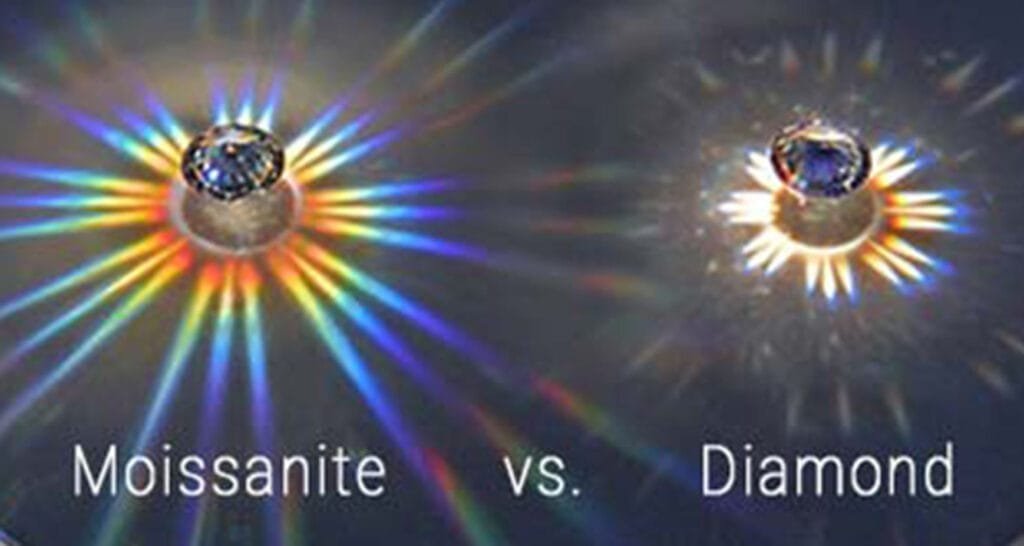
| Refractive Index & Fire | Refractive index 2.65–2.69, vivid fire, rainbow-like sparkle | Refractive index 2.42, soft fire, elegant and natural glow |
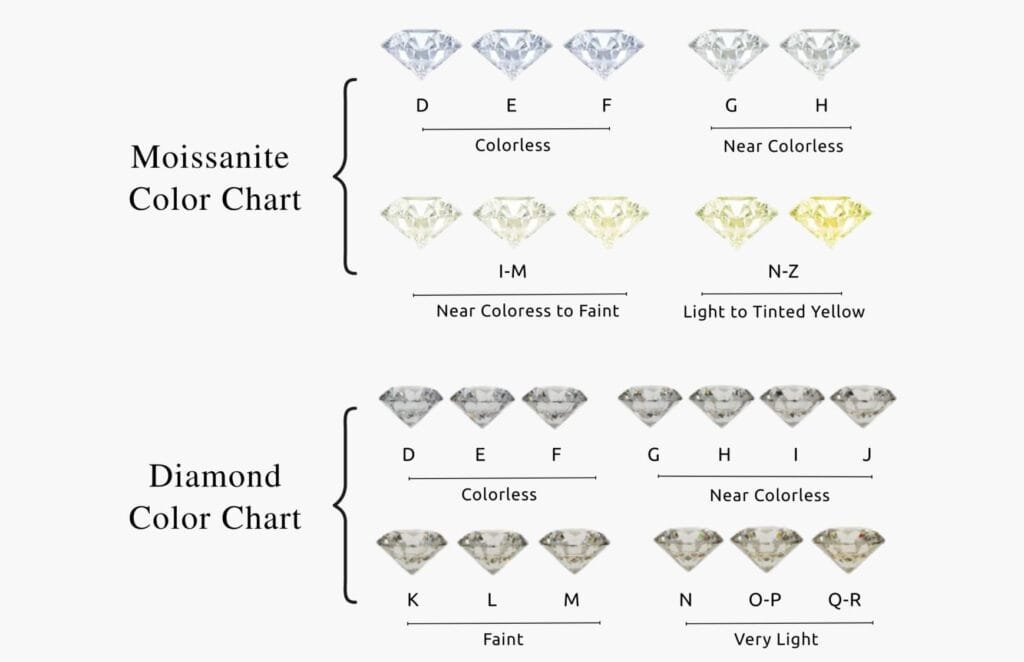
| Color | Mostly colorless, may show slight yellow or gray under certain light; lab-created colored options available | Colorless or fancy colors (blue, pink, yellow diamonds), D-F colorless diamonds are most valuable |
| Price | Approximately $250–1000 per carat, high cost-performance, can get larger and brighter stones | Natural diamonds start at $1,000 per carat, high-end diamonds can reach tens of thousands; valuable for collection and resale |
| Sourcing & Sustainability | Almost entirely lab-grown, environmentally friendly and conflict-free | Natural diamonds may involve ethical concerns; lab-grown diamonds are more sustainable |
How to Distinguish Diamonds from Moissanite
Although diamonds and moissanite look very similar, there are scientific methods and observation techniques to distinguish them. The following are practical ways to identify gemstones:
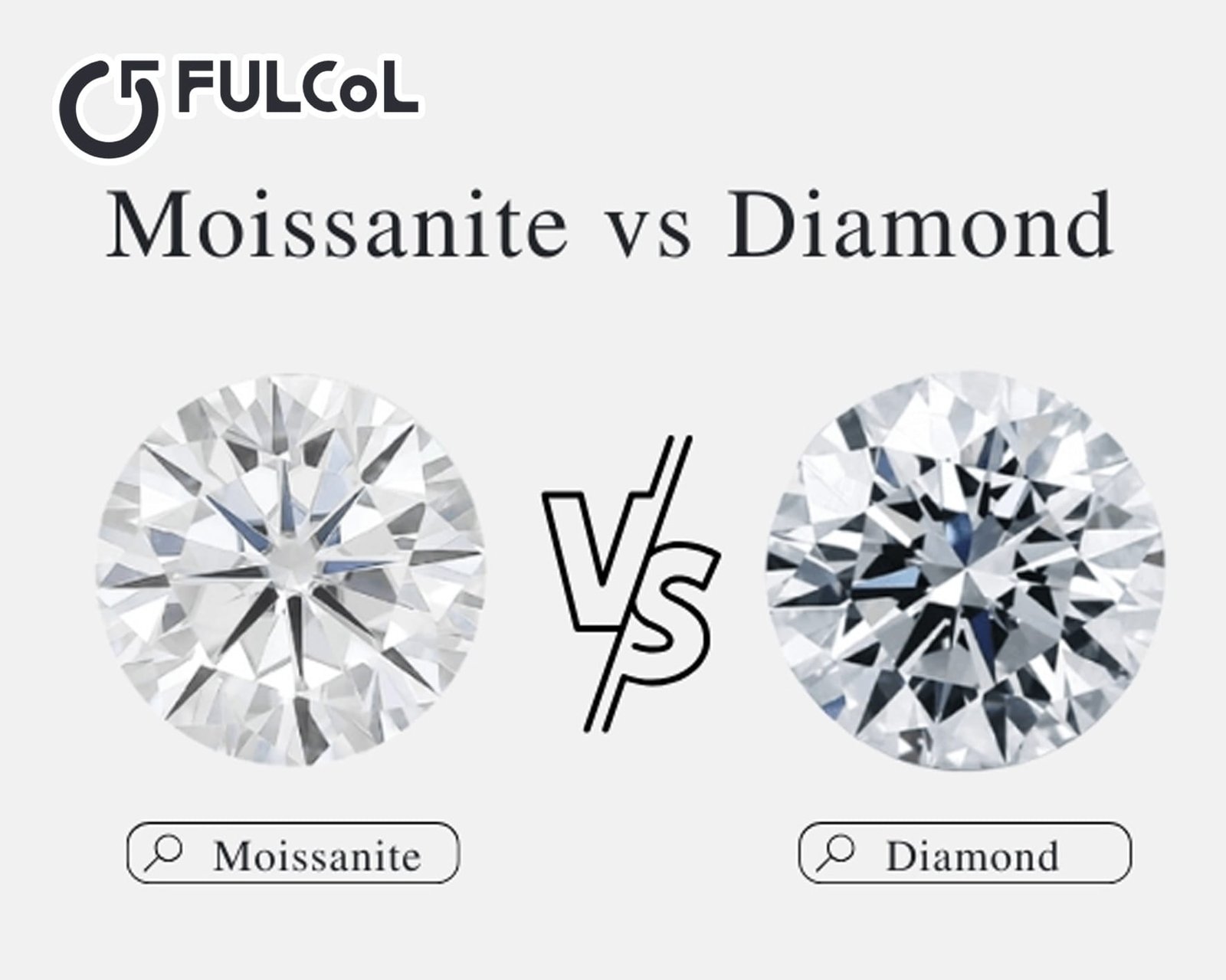
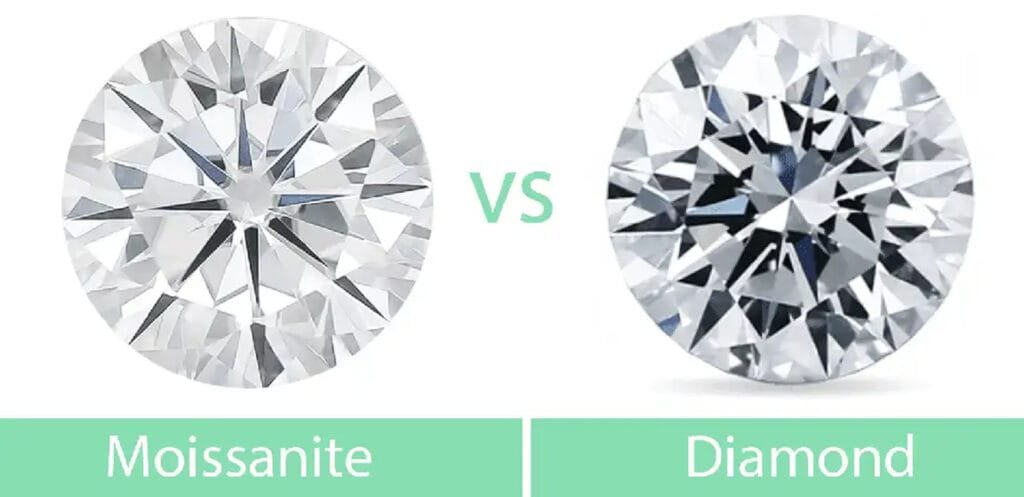
- Fire Observation: When light enters a gemstone, it is refracted and dispersed into colorful flashes. Moissanite, with a higher refractive index (2.65–2.69), produces brighter, more vivid rainbow-like flashes. In contrast, diamonds have softer, evenly distributed fire. Comparing under sunlight or bright light can clearly reveal the difference.
- Price Clues: Price is often an intuitive indicator. Moissanite usually costs only 10%–15% of a diamond of similar size and quality. Even with similar cut and clarity, its price is far lower than a natural diamond. If a gem that looks like a diamond is unusually cheap, it is likely moissanite or another alternative. However, price alone does not guarantee authenticity; other verification methods should also be used.
- Professional Testing Devices: Diamond or moissanite testers detect thermal conductivity, electrical conductivity, or refractive properties to quickly verify authenticity. Diamond testers confirm if a gemstone labeled as diamond is real, while moissanite testers identify lab-grown moissanite. This is a reliable method for jewelers and collectors.
- Internal Clarity: Lab-grown moissanite usually has minimal inclusions, with clarity higher than most natural diamonds. Natural diamonds may contain tiny inclusions or gas bubbles, a feature of natural formation. Observing internal structure under magnification can reveal the difference.
- Unique Optical Features: Polished moissanite may display slight “double refraction” effects when viewed from different angles—a feature absent in diamonds. Diamonds refract light uniformly, creating a single clear sparkle. This characteristic can be used as an auxiliary identification method.
Using these methods, jewelry enthusiasts and designers can accurately distinguish diamonds from moissanite, providing a reliable basis for gemstone selection and custom ring design.
How to Choose Between Moissanite and Diamond for Custom Rings
When designing a custom ring, choosing moissanite or diamond depends on budget, design, target customers, and wear scenarios. Practical guidelines include:
- Budget and Cost-Effectiveness: Diamonds are expensive, especially high-clarity colorless ones, suitable for premium custom designs. Moissanite is affordable, offering larger carat stones with more brilliance, ideal for cost-conscious custom designs.
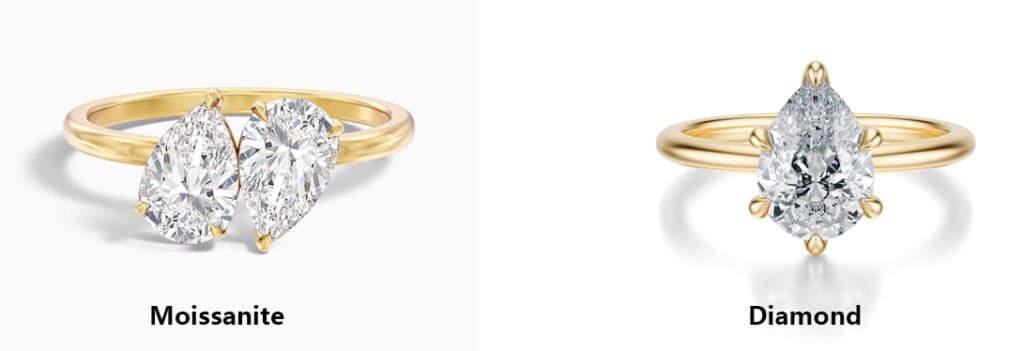
- Design Style: Complex ring designs, such as multi-stone settings or hollow structures, are easier with moissanite. Diamonds are best for classic, minimalist designs that emphasize natural brilliance and luxury feel.
- Target Audience: Younger or eco-conscious customers prefer moissanite, while premium collectors or engagement ring buyers favor diamonds for rarity and brand value.
- Wear Scenarios and Durability: For daily wear or frequent use, moissanite is durable enough. Diamonds are ideal for long-term wear, symbolizing enduring value.
- Customization and Flexibility: Moissanite allows more control over color, size, and cut, facilitating personalized designs. Diamonds offer uniqueness and increase collection and brand value.
- Comprehensive Decision: Combine budget, design, target audience, and wear scenario to make a rational choice, balancing cost with visual appeal and market acceptance.
Fulcol’s Custom Ring Solutions
As a professional custom ring manufacturer with over 21 years of experience, Fulcol is committed to providing high-quality, customizable jewelry solutions for global brands. Whether engagement rings, fashion rings, or bulk gift orders, Fulcol transforms creative designs into market-ready products. Key advantages in custom ring solutions include:
- Professional Design Capability
Fulcol has an experienced design team skilled in 3D modeling, trend research, and custom engraving. Whether clients provide sketches, concept drawings, or need original designs from scratch, the team quickly converts ideas into visual 3D models, optimizing proportion, material, and comfort. Clients can provide feedback in real time, ensuring true customization. - High-Quality Materials and Craftsmanship
Fulcol offers 925 sterling silver, K gold, and brass ring materials, with advanced plating and surface treatment options. Each moissanite or diamond is carefully selected for uniform color and precise cut. Ring setting adheres to international standards, with precise polishing and mounting tests for long-term stability and durability. These strict material and process controls make Fulcol a trusted custom ring factory. - Strict Quality Control and International Standards
Each ring undergoes rigorous inspection before shipment, including size measurement, setting stability, surface luster, and gemstone security. Fulcol follows international jewelry manufacturing standards, ensuring durability, appearance, and brand compliance. Diamonds can come with GIA/IGI certificates; moissanite includes lab parameters and reports, providing reliable quality assurance. - Comprehensive Brand Support and Custom Services
Fulcol provides full branding solutions beyond ring manufacturing:
- Custom Engraving & Branding: Engrave logos, brand marks, or personalized text inside or outside the ring.
- Packaging Customization: Premium gift boxes or unique packaging tailored to brand identity.
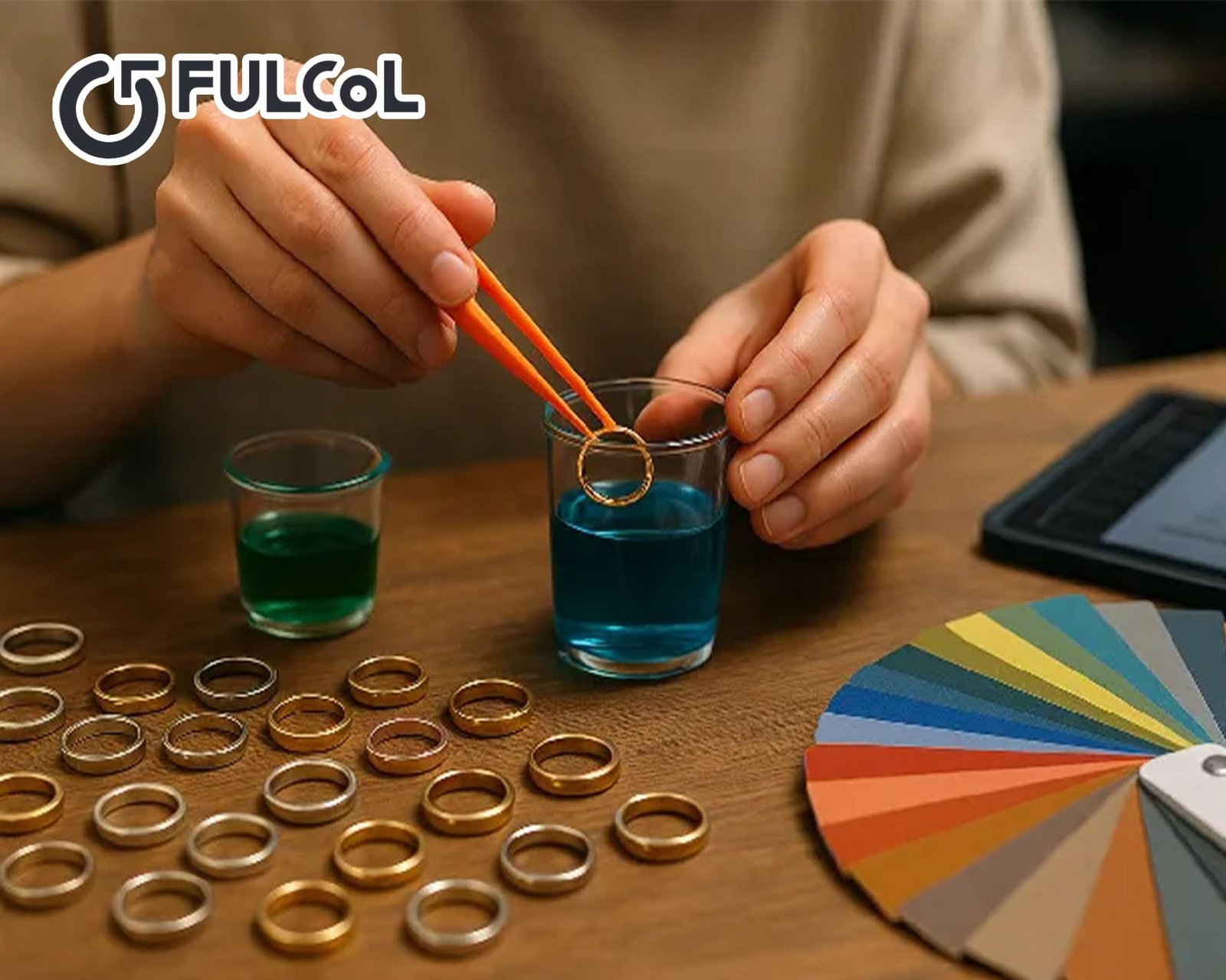
- Material & Finish Options: Various metals, plating colors, and surface treatments per brand requirements.
- Creative Advice & Trend Analysis: Market trends and consumer preferences guide customers to create trendy, market-relevant collections.
- Global Clients and Experience
Since 2004, Fulcol has served 10+ global brands, launching over 1200+ new designs annually, supported by a 26,000 m² production base and 149 professional staff. Extensive industry experience and mature craftsmanship enable Fulcol to meet the needs of emerging brands, small businesses, and large retailers alike.
Through professional design, quality materials, flexible production, and full brand support, Fulcol is a trusted partner for global jewelry brands. Whether creating unique engagement rings, fashion rings, or bulk gifts, Fulcol ensures accurate implementation from concept to finished product.
| Start Your Custom Order | Email: info@fulcol.com | Number:+86-18876512305 |
Choosing between moissanite and diamond is both an aesthetic and practical decision, balancing budget, brand image, and wear requirements. Diamonds are valued for natural rarity, elegant luster, and resale value, while moissanite is favored for dazzling fire, affordability, and controllable characteristics.
When designing custom rings, understanding gemstone properties, identification methods, and rationally considering budget, design style, and customer needs is key.
With a professional custom ring manufacturer and custom ring factory like Fulcol, brands and designers receive full support: from creative design, material selection, exquisite craftsmanship, strict quality control, to brand customization and packaging. Every ring accurately reflects creativity and quality. Whether for engagement rings, fashion rings, or bulk gifts, Fulcol turns your ideas into reality.